


The Future of Classroom Technology: Human-Centered, Wonder-Driven Learning

Chosen theme: Future of Classroom Technology. Step into a near future where classrooms blend human warmth with intelligent tools, turning curiosity into momentum and every lesson into an invitation to create, question, and connect. Subscribe to follow this evolving journey.

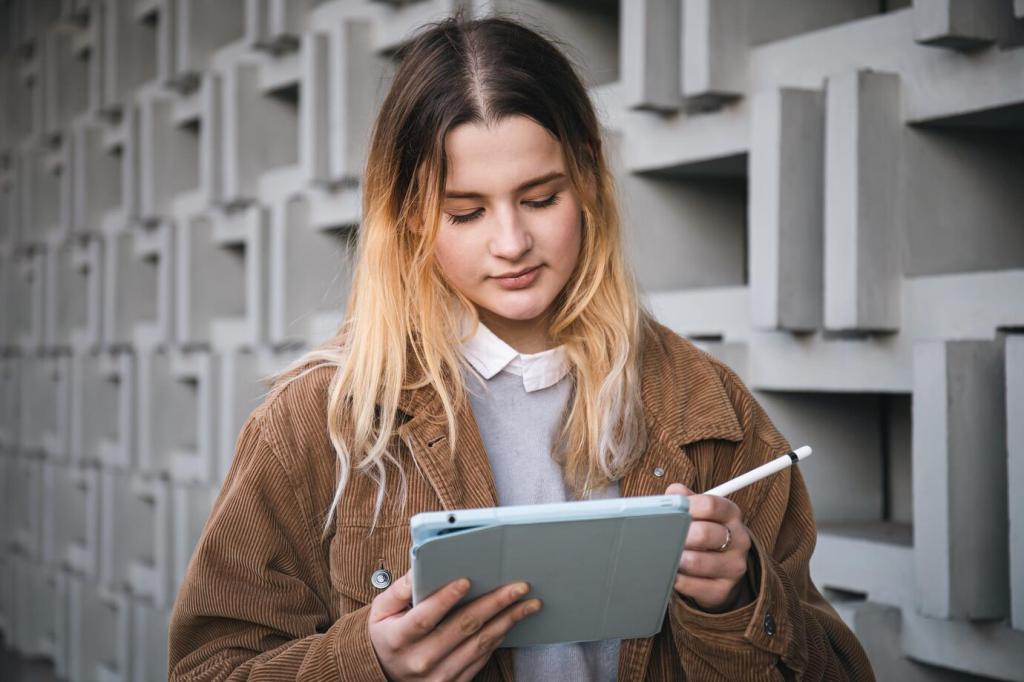
Mia walks in, taps her student ID, and her tablet offers a five‑minute warm‑up tailored to last night’s confusions. The system flags two concepts quietly, while her teacher sees a friendly dashboard that suggests quick mini‑groups, not labels.

AI and Teachers: A Powerful Partnership

Co‑Planning Lessons with Transparent Suggestions

An AI co‑planner proposes lesson arcs aligned to standards and student readiness. Teachers accept, modify, or reject ideas, with clear rationales shown. This keeps professional agency front and center while reducing administrative friction that drains energy.

From Grading to Coaching: Feedback That Lands

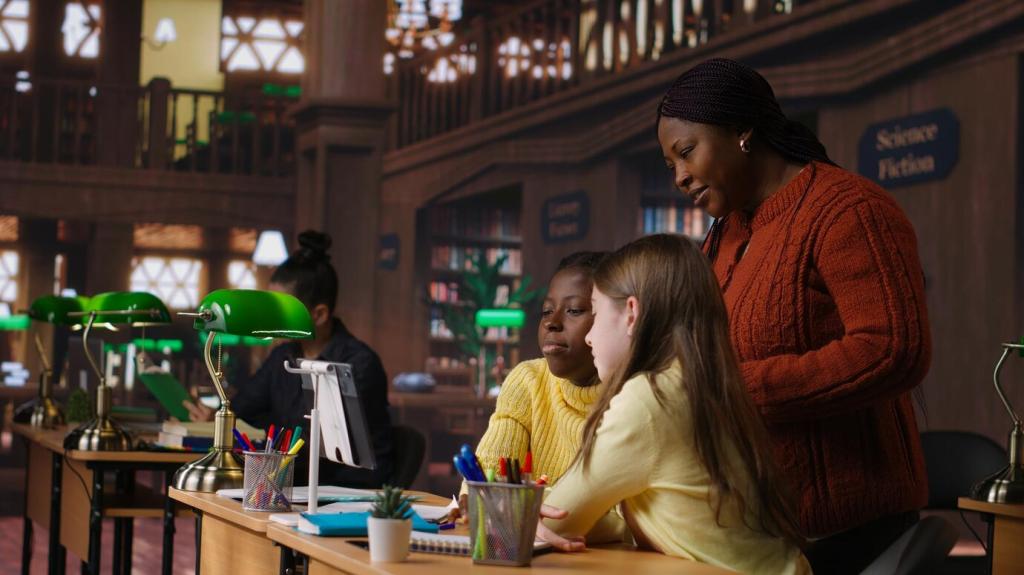
Instead of stacking papers, teachers use assisted feedback that highlights patterns and suggests next‑step prompts. Students receive examples, sentence stems, and choice boards. The result is faster cycles and deeper dialogue, not faster compliance and shallow fixes.

Workload Reimagined, Well‑Being Protected

Scheduling, attendance, and accommodation checks run quietly in the background. Alerts surface only when meaningful. This protects focus, prevents burnout, and returns hours to conferencing, curiosity, and care. Subscribe if you want templates for these workflows.

Immersive, Spatial, and Hands‑On Learning

Field Trips Without Buses

Classes traverse coral reefs, ancient cities, and molecular structures from their desks. Lightweight devices or shared stations reduce costs. Teachers anchor explorations with guiding questions, ensuring experiences are curriculum‑rich, not novelty‑driven spectacles.

Making the Invisible Visible

In physics, forces become hovering vectors; in biology, proteins fold in students’ hands. Haptic feedback supports embodied understanding. Multi‑modal access ensures motion sickness risks are managed and alternative pathways keep every learner engaged meaningfully.

Creation Over Consumption

Students design their own scenes—lab setups, historical reconstructions, data visualizations—and share them with peers. Authoring tools teach storytelling and ethics alongside content. Comment below: what immersive experience would transform your current unit most profoundly?

Privacy, Safety, and Ethical Guardrails

Data collection defaults to minimal, with clear toggles, time limits, and in‑context explanations. Families see what’s collected and why, and can revoke access easily. Ethical tech should feel like a collaborative contract, not a hidden exchange.

Privacy, Safety, and Ethical Guardrails

Models are audited for bias against language backgrounds, disabilities, and socioeconomic markers. When a recommendation appears, a plain‑language rationale follows. Teachers and students can challenge outcomes and provide corrections that meaningfully retrain systems.

Equity and Access: No Learner Left Offline

Materials sync when connections appear, and core tools run locally. Lessons degrade gracefully to text, audio, or printable formats. This keeps learning continuous for students commuting between homes, shelters, or rural zones with inconsistent service.

Equity and Access: No Learner Left Offline

Schools partner with libraries and local providers to extend neighborhood Wi‑Fi. Devices are rugged, repairable, and supported by student tech crews. This builds digital literacy, leadership, and belonging while stretching budgets responsibly and sustainably.


Assessment That Feels Like Learning

Students earn badges for real tasks—designing an experiment, facilitating a seminar, shipping a small app. Evidence lives in portfolios with reflections that prove understanding beyond a score. Colleges and employers value artifacts, not just numbers.

Assessment That Feels Like Learning

Sensors and software provide formative insights during projects: collaboration patterns, research depth, iteration cycles. Teachers turn signals into coaching moments, not surveillance. Students learn to read their own data with humility and confidence.

Sustainable, Responsible Technology in Schools

Low‑power devices, efficient charging carts, and smart scheduling reduce costs and emissions. Cloud workloads prioritize greener regions when possible. Students track impact and propose improvements, turning sustainability into a living, learning project.

Sustainable, Responsible Technology in Schools

Student‑run repair bars extend device life while teaching diagnostics and stewardship. Parts are modular, manuals open, and warranties friendly to tinkering. This is more than frugality—it is a culture of care for tools and our shared environment.

Sustainable, Responsible Technology in Schools

Districts weigh accessibility, privacy, and labor practices alongside price. Vendor scorecards are public, and pilots include student feedback. Subscribe to get our open, adaptable rubric for sustainable edtech purchasing with community accountability built in.
Spyrospanas
Privacy Overview

This website uses cookies so that we can provide you with the best user experience possible. Cookie information is stored in your browser and performs functions such as recognising you when you return to our website and helping our team to understand which sections of the website you find most interesting and useful.